A single spin can decide whether a player keeps a slot in their rotation or abandons it after five minutes. That blunt reality shapes how most gaming analysts approach a new release, and it applies directly to The Big Deal Deluxe, a title that has generated steady conversation among slot enthusiasts looking for something between classic simplicity and modern volatility. The name suggests spectacle, but the actual experience is more measured than the branding implies, and that gap between expectation and reality is exactly what deserves closer scrutiny.
This breakdown looks at the mechanics, the visual presentation, and the practical performance of the game from the perspective of someone who has actually sat through extended play sessions rather than skimmed a promotional page. Readers who want to try the title firsthand before finishing this piece can find it through this page, where the game is hosted alongside its full paytable and rules. The rest of this analysis assumes no prior familiarity with the title and builds understanding step by step, from core mechanics to final verdict.
What follows is not a marketing summary. It is a working assessment built around the questions a cautious player actually asks: does the game reward patience, does it punish short sessions, and does it hold up against the dozens of similar titles competing for the same audience? Those questions guide every section below.
What Is The Big Deal Deluxe?
The Big Deal Deluxe belongs to a category of slots designed around a game-show aesthetic, borrowing visual cues from televised prize reveals rather than traditional fruit-machine or mythology themes. The reels are dressed in bold primary colors, oversized symbols, and a layout that prioritizes clarity over ornamentation. This matters because a cluttered screen is one of the most common complaints players raise about deluxe-tier slots that try to pack too much animation into a small viewport.
Origins and Concept
The title draws inspiration from classic prize-selection game shows, where contestants choose between options with unknown values. That structure translates naturally into a bonus round built around selection and reveal, giving the game a narrative hook that pure spin-and-win titles often lack. The concept is not original to this release, but the execution here leans into simplicity rather than trying to reinvent the format.
Target Audience
This is a game built for players who prefer a lighter cognitive load. There are no sprawling cluster-pay mechanics or multi-layered modifier systems to memorize. Anyone doing a serious the big deal deluxe analysis will notice quickly that the design favors accessibility over complexity, which positions it closer to casual players and newcomers than to veterans chasing intricate math models.
Where It Fits in the Market
Positioned among mid-tier releases, the title competes with a crowded field of game-show-themed slots. It does not attempt to compete with high-complexity mechanical showcases, and that restraint is arguably its most defining trait.
The Big Deal Deluxe Features
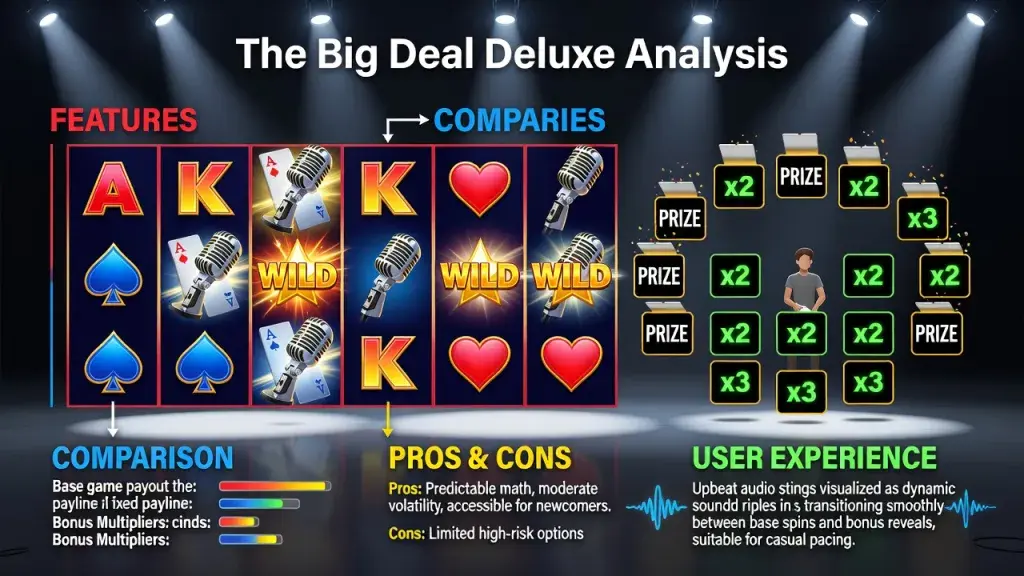
Breaking down the big deal deluxe features requires separating cosmetic elements from mechanical ones, since the two are often confused in casual reviews. The core reel structure uses a standard five-reel, three-row grid, with a fixed number of paylines that keeps the math transparent.
Core Gameplay Mechanics
The base game rewards symbol combinations across active paylines, with a payout table that scales predictably from low-value card symbols to high-value thematic icons. Nothing here departs from established convention, which is intentional. The designers clearly prioritized familiarity over novelty in the base spin structure.
Bonus Rounds and Special Symbols
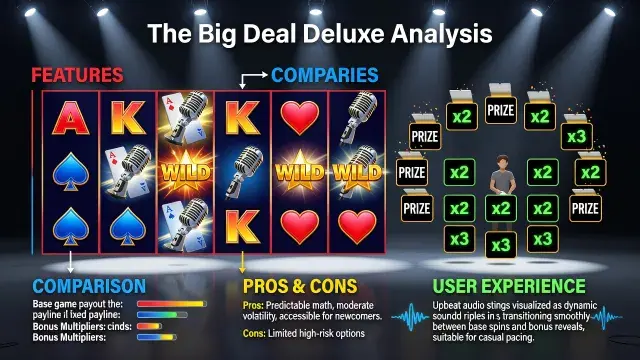
The standout mechanic is the prize-selection bonus, triggered by landing scatter symbols in sufficient quantity. Once activated, players choose from a set of hidden values, echoing the game-show format the title is built around. Wild symbols substitute for standard icons, and multipliers occasionally attach to specific reels during bonus rounds, adding variance without overwhelming the player with rules.
Visual and Audio Design
Sound design uses upbeat, show-style stings for wins, paired with bright transitions between base and bonus modes. The visual palette avoids the murky, overly dark aesthetic common in many modern slots, opting instead for a lit-stage look that reinforces the game-show theme.
- Five-reel, three-row standard grid
- Fixed payline structure for predictable math
- Prize-selection bonus round with hidden multipliers
- Wild substitution across all standard symbols
- Bright, high-contrast visual theme with game-show audio cues
The Big Deal Deluxe Comparison
Context matters more than isolated review scores, so a proper the big deal deluxe comparison needs to place the title against both direct thematic competitors and broader category standards.
Versus Similar Game-Show Themed Slots
Compared to other prize-reveal titles in the same genre, this release leans lighter on volatility. Competing titles often push players toward higher-risk bonus structures with steep variance, while this game keeps outcomes closer to a steady middle ground. That makes it more approachable but potentially less thrilling for high-stakes players.
Versus Classic Fruit-Machine Style Slots
Against traditional fruit-machine formats, The Big Deal Deluxe offers a noticeably richer bonus structure. Classic slots typically rely on straightforward multipliers or free spins, whereas this title's selection-based bonus adds a layer of anticipation that pure random-number spins cannot replicate.
Where It Falls Short in Comparison
The trade-off is depth. Titles built around cascading wins, expanding grids, or progressive jackpots offer longer-term engagement that this game does not attempt to match. Players who prioritize long session variety may find the mechanical range here limited after repeated play.
The Big Deal Deluxe Pros and Cons
No honest the big deal deluxe pros and cons breakdown can ignore the trade-offs baked into a design built for accessibility rather than complexity.
Strengths
- Clear, uncluttered interface that suits both new and casual players
- Bonus round offers genuine suspense through the selection mechanic
- Predictable payline structure reduces confusion about win conditions
- Strong audio-visual cohesion around the game-show theme
Weaknesses
- Limited mechanical depth compared to feature-heavy competitors
- Moderate volatility may feel flat to players chasing large swings
- Bonus round frequency can feel sparse during shorter sessions
Who Should Consider Playing
Players new to slots, or those who prefer steady, low-friction sessions over high-risk chasing, will find the most value here. Veterans seeking mechanical novelty should treat this as a casual break rather than a primary title.
The Big Deal Deluxe User Experience
Mechanics and features only matter if the actual the big deal deluxe user experience holds up during real play, across different devices and session lengths.
Interface and Navigation
The control panel stays minimal, with bet adjustment, autoplay, and paytable access all within a single click. This reduces friction for players switching between devices or platforms.
Mobile vs Desktop Performance
The game scales cleanly to smaller screens without cropping key visual elements, a detail many deluxe-tier slots still get wrong. Desktop play offers slightly crisper animation transitions, but the difference is marginal enough that mobile players lose little.
Pacing and Session Flow
Base game spins move quickly, keeping session pacing brisk. The bonus round, when triggered, slows things down deliberately, giving the selection mechanic room to build tension rather than rushing the payoff.
Frequently Asked Questions
Is The Big Deal Deluxe suitable for beginners?
Yes. The fixed payline structure and clear interface make it easy to understand within a few spins, without requiring familiarity with complex bonus systems used in other modern slots.
How volatile is the game compared to other slots in its category?
It sits in the moderate range. Wins arrive with reasonable frequency in the base game, while the bonus round introduces higher variance without pushing into extreme high-risk territory.
Does the bonus round trigger often enough to stay engaging?
Trigger frequency is moderate rather than generous. Players running shorter sessions may go several spins without seeing the bonus, which is worth factoring into expectations before playing.
How does the theme affect the actual gameplay?
The game-show theme directly shapes the bonus mechanic, since the selection-based reveal mirrors televised prize formats. Outside the bonus round, the theme mainly influences visual and audio presentation rather than base game math.
Is it better suited to mobile or desktop play?
Both platforms perform well, though desktop offers marginally smoother animation during transitions. Mobile players will not lose meaningful functionality or clarity.
How does it compare to higher-volatility deluxe slots?
It offers steadier, more predictable outcomes, trading the large swings of high-volatility titles for consistency. Players who prefer longer, smoother sessions over occasional large spikes will likely prefer this balance.